Everyone is bracing for AI to erase jobs. I think we are bracing for the wrong thing.
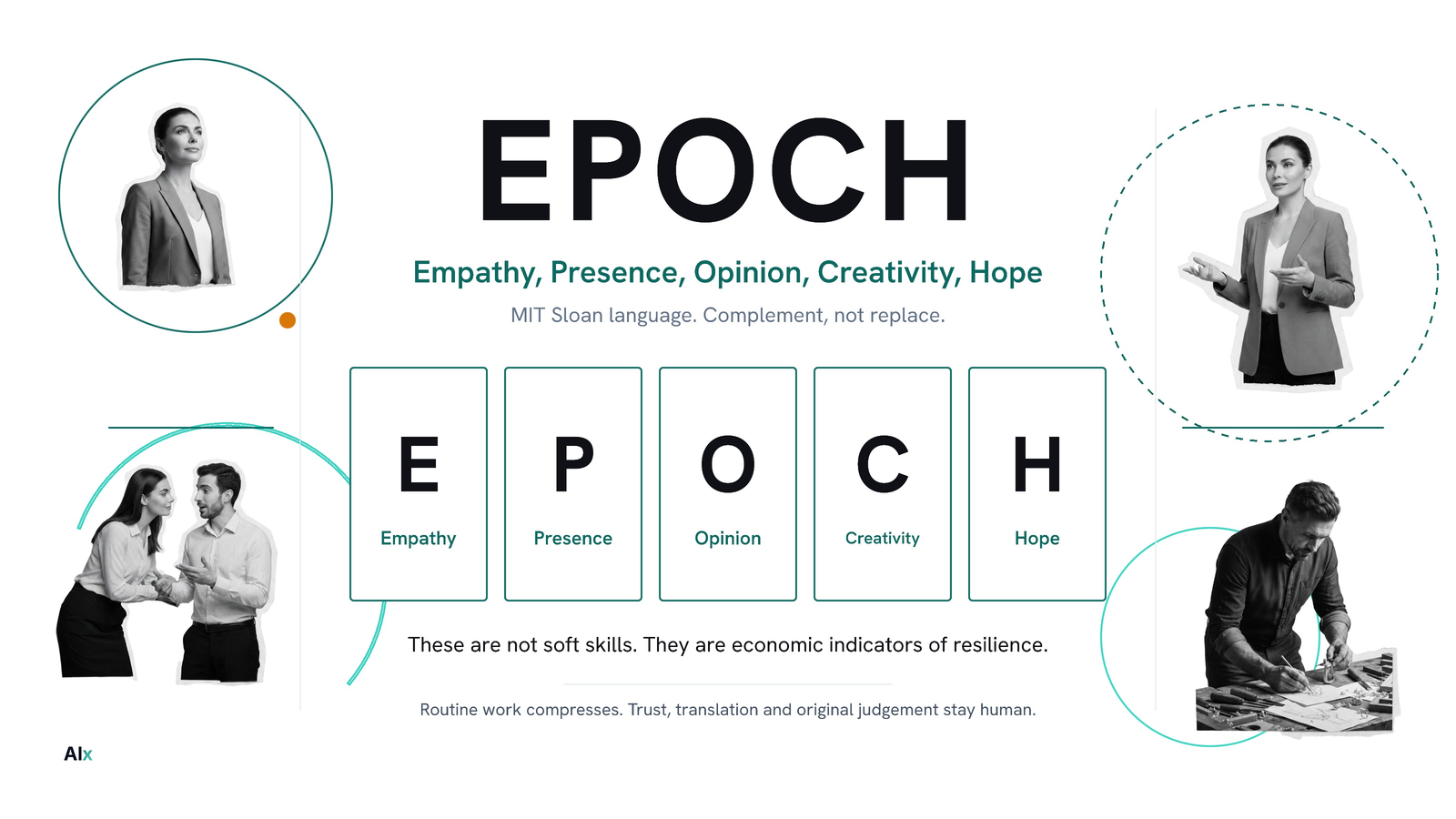
The prevailing anxiety assumes a simple equation: machines get smarter, humans get displaced. But the evidence suggests something more subtle and, for operating leaders, more urgent. MIT Sloan research reframes the conversation away from the binary of “jobs lost” versus “jobs saved,” and toward the human capabilities that complement what machines cannot do. They call it EPOCH: Empathy, Presence, Opinion, Creativity, Hope.
These are not soft skills. They are economic indicators of resilience.
A Preference Shift, Not a Purge
We are not watching mass automation. We are watching a preference shift.
Routine work compresses while the tasks that demand trust, translation, and original judgement become the entire job. AI-exposed roles are already refocusing on these distinctly human skills. The assistant who once scheduled meetings now mediates between conflicting team priorities. The analyst who pulled reports now frames what the numbers mean for a strategy that has no precedent.
Here is my uncomfortable view: AI does not need mass layoffs to make a role obsolete. It only needs employers to value a different stack of capabilities. Technical fluency is becoming table stakes. The real premium is shifting to coordination, context, and belief.
Spend the next year optimising for last year’s job description, and your skills depreciate while others compound.
The Cost of Waiting
The cost of treating this as a future problem is concrete.
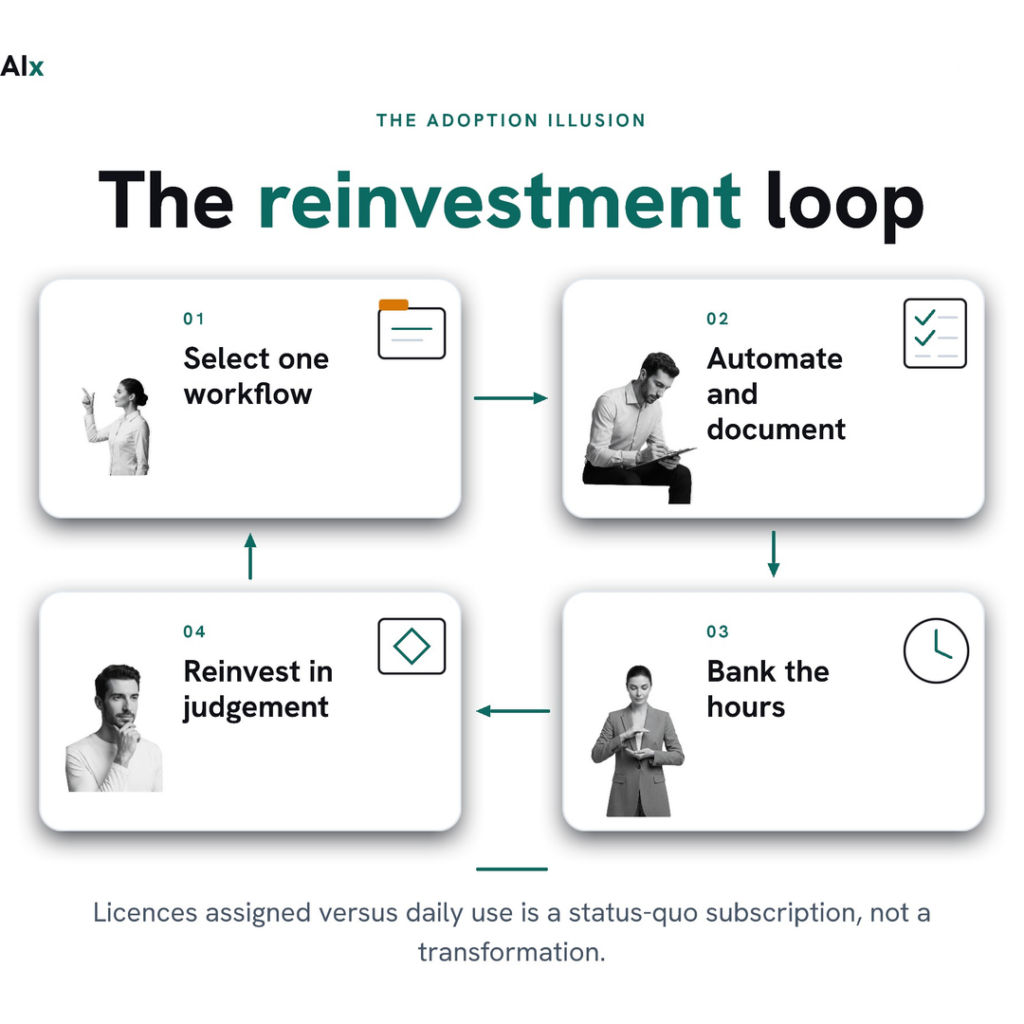
You misallocate budget to automation theatre, pilots that look impressive but leave workflows and decision rights untouched. You watch your best people drift toward roles that reward their judgement because you never codified how judgement should be exercised in your firm. You fail to retrain those who understand your business because you never clarified what should remain human in the first place.
Capability debt accrues silently. By the time the org chart reflects the new reality, the people you needed have already left, and the ones who stayed have narrowed their work to the very tasks most easily delegated to a prompt.
What Is the Human Superskill?
Which brings me to the question I keep asking leaders:
If AI can generate the memo, write the code, and summarise the deck, what is the human superskill that sets you apart?
My answer: the ability to hold a room, take an accountable stand, or imagine a future the data does not yet prove.
These capacities cannot be downloaded. They are built through practised discernment, negotiated trust, and the willingness to be wrong in public. That is an expensive thing to build at the last minute.
Where to Start
Stop panic-scrolling.
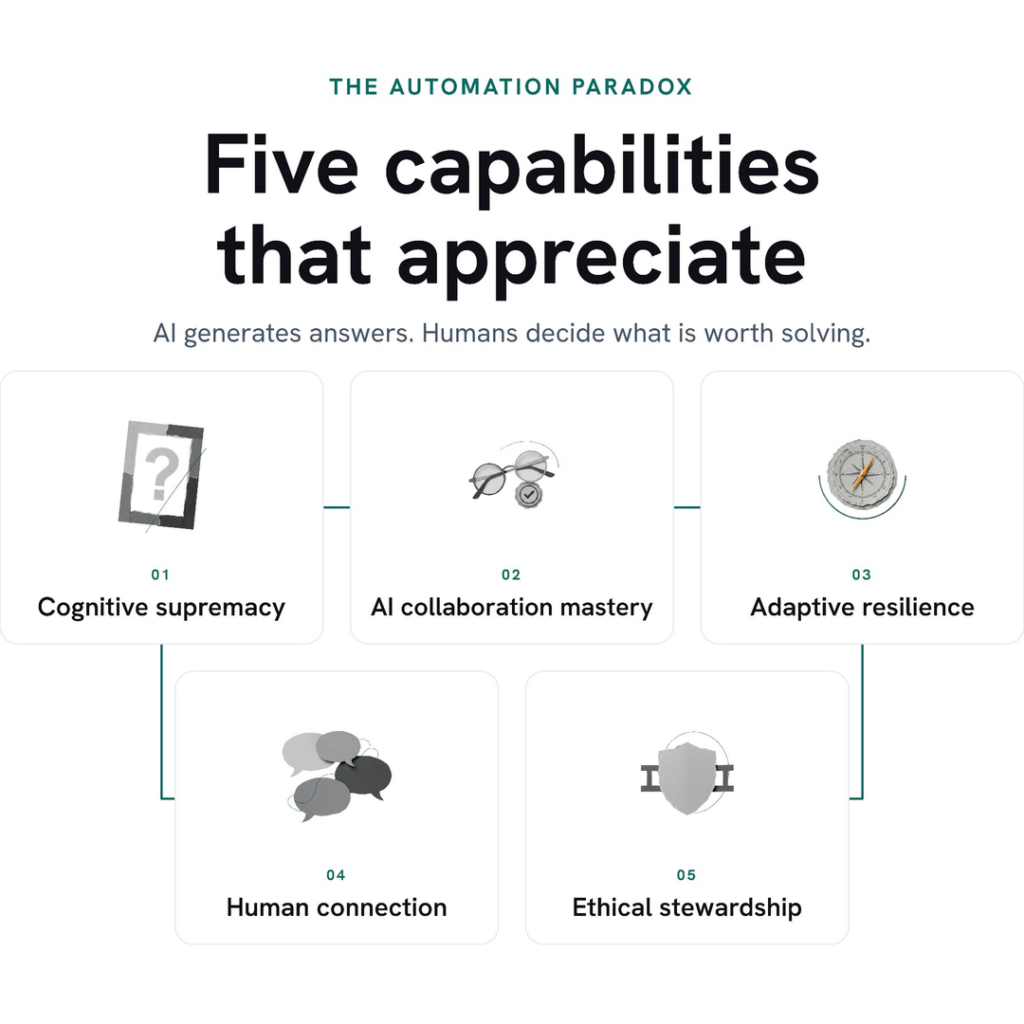
Instead, audit three things inside your operating model: what is commoditising, what requires trust and translation, and what compounds because it is irreducibly human.
If you cannot name these for your team, you are managing toward a job description that expired six months ago.
That audit lands first in a small or mid-sized business, where the capability stack is a handful of people, then in a council, and for individuals whose role is shifting under them.
If your AI investments are not yet mapped to a clear capability stack (what to automate, what to elevate, and what must remain stubbornly human in your workflow), Schedule a Call before the next budget cycle locks in more waste.
References
- The Human-AI Paradox: Why Integration Outperforms Replacement, Mathias Otte (LinkedIn)
- New MIT Sloan research suggests AI more likely to complement, not replace, human workers, MIT Sloan
- EPOCH score: AI-exposed and non-AI-exposed jobs, Statista