AI adoption is climbing. Productivity is flat. This should disturb anyone signing the cheques. The gap is not technical, it is disciplinary.
The Productivity Paradox
Most organisations look at this gap and assume the problem is technical. Better models. More training. Fresher prompts. But the gap is rarely technical; it is disciplinary. We have confused deploying software with changing how work gets done.
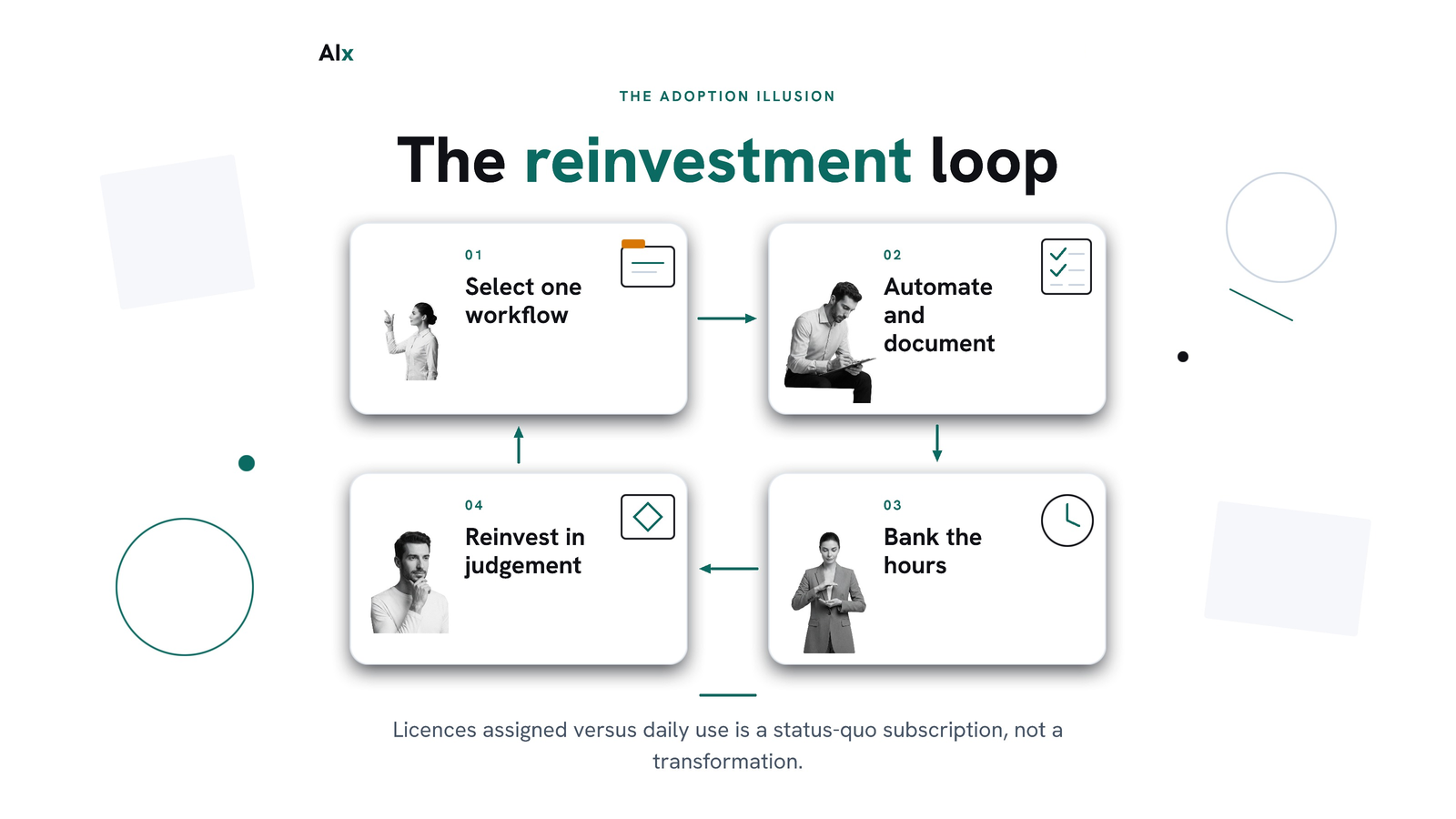
Widespread tool use does not mean output rises. Often, it simply reshuffles the same hours into new forms of administrative theatre. A rollout where eighty per cent of licences are assigned but only twenty per cent show daily use is not a transformation. It is a six-figure subscription to the status quo.
That is not a technology failure. It is a cash management failure dressed in the clothing of innovation.
Why Broad Pilots Fail
The pattern I see in leadership teams is depressingly consistent. Announce a pilot. Procure seats. Celebrate logins. Then watch as Tuesday morning stays identical to last quarter. People open the new tool alongside the old spreadsheet, duplicate effort, and generate new reports no one asked for.
The “art of the possible” becomes a trap. When everything is possible, nothing is mandatory. Companies do not need more exposure to capability. They need ruthless subtraction.
A Disciplined Framework: The Reinvestment Loop
I use a personal rule, and I advise the same to leadership teams: every new tool must claw back at least five hours of real labour before I expand its footprint. Not hypothetical savings. Not “efficiency potential.” Actual, documented, and defended hours returned to the organisation.
Think of it as a reinvestment audit rather than a technology rollout. The framework is simple:
Select one painful workflow. Not a department. Not a function. One specific process that drains recurring hours, compliance checks, meeting prep, client follow-up, contract first drafts.
Automate and document. Build the intervention so it is repeatable and auditable. If the workaround relies on one hero employee and their pet prompt library, it is not a system. It is a dependency.
Bank the win. Measure the hours reclaimed. Protect them. If you automate a task and the organisation simply fills the gap with more meetings, you have achieved nothing.
Reinvest. Redirect that capacity into judgement work, client relationships, or the next workflow on the list.
AI is not a strategy. It is a reinvestment mechanism. Treat it like cash-flow management, not moonshot research.
What This Costs When You Skip the Discipline
The leadership teams that gain ground move in tight, repetitive cycles: one proven use case, bank the win, reinvest the hours, repeat. The teams that lose ground chase broad enablement and end up with the same catalogue of stalled pilots, scattered adoption, and talent erosion.
Your best operators notice when leadership funds dashboards nobody reads while refusing to kill the weekly report that takes three people a day to compile.
The costs are specific. Stalled pilots consume IT credibility and governance bandwidth. Wasted AI spend accumulates in annual contracts that outlast the executive who bought them. Weak adoption creates compliance exposure because shadow workflows and ungoverned prompts multiply where official tools fail to relieve pressure. Over time, this erodes the organisation’s willingness to try again.
The Question That Exposes the Gap
Here is a claim smart readers can, and should, argue with: if you cannot name the specific workflow you would kill to get back an afternoon from, you are not ready for an enterprise AI licence. Readiness is not budget or board enthusiasm. It is clarity about what work is actually worth a human doing.
Productive organisations do not ask what the tool can generate. They ask what burden it can remove.
If your team is still grinding through repetitive admin while leadership debates long-term AI visions, the discomfort is yours to sit with. The productive discomfort, at least.
That is true first in a small or mid-sized business, where one unused licence is a real cost, then in a council, and for anyone still signing the cheques.
If you want to stop subscribing to the status quo, start with one workflow. If you are serious about turning AI spend into reclaimed capacity, Schedule a Call. We will find your first five-hour win before you renew another subscription.